Friday, October 23, 2009

Scopitone Videos

This week we were provided with a brief history of music videos and introduced to the scopitone, a jukebox-like device from the 60s that music videos were originally made for. By comparing the 1960’s music videos made for the scopitone with those from today, one can observe just how far music videos have come from their 1960s scopitone counterparts.

After doing a search for scopitone videos on Youtube and watching a variety of these search results, I’ve realized that the scopitone videos from the 60’s are all very similar in style to one another. Being use to such a wide range of video styles and techniques used in modern day music videos, I found the lack of variety and style to be quite boring and repetitive, but amusing nonetheless.

Watching these videos from the 60’s must be done with a grain of salt. Being so use to the advanced technology, special effects and expensive budgets that make up most of today’s videos, films from the 60’s appear to be very basic and boring.

Although videos in the 60s were made with smaller budgets, and less technology, I feel that they were lacking in many other elements that could have made them more dynamic. The camera work in the scopitone videos was very simplistic. Pans, tilts, and zooms were often utilized within the scopitones; however, they lacked any dynamic camera work such as extreme angles, canters, as well as any crane or dolly shots. The scopitones often had long drawn out shots, requiring minimal editing, while many contemporary videos are quick paced with shots lasting only a second or so before the angle is changed. Lighting and tone were also fairly consistent throughout the scopitones. The singers always seem to be cheery and smiling, and surrounded by high key lighting. Today a wide variety of feelings and emotions are portrayed through music videos, effectively using differing lighting techniques to bring these emotions across.

The sets and props used within the videos from the 60’s were very simplistic as well, and often gave the setting a very stage-like feel. The props and sets, along with the actions of the people on screen often directly reflected what was being sung about. For example, in Joi Lansing’s “Web of Love,” as the lyrics: “I was game and you took aim and struck me through my heart,” are sung, a dart strikes a giant heart being worn by Lansing. While singing the lyrics: “trapped in a web of love,” Lansing dances while tangled in a giant spider web. Contemporary videos, on the other hand, are often a lot more visually figurative and artistic.

Cheesy dances performed by beautiful girls in skimpy bathing suits were a recurring element of the scopitone videos that I watched. The dances were very simplistic and their performances didn’t seem to require a lot of skill. The dances performed in music videos today tend to be more advanced and require a decent amount of skill and talent, although this is not always the case (sorry Fat Joe).

Watching these 1960’s scopitone videos from a 21st century perspective, and being so accustomed to the videos of today, it was very difficult for me to appreciate and take these videos seriously. I do realize, however, that these videos were probably very innovative for their time, and that they are the roots from which today’s music videos have evolved.

Tuesday, October 13, 2009

Animation Interactive Inspiration

For my animation interactive assignment I want to tell a short interactive children’s story about a hungry boy who makes himself a sandwich. There will be multiple buttons throughout the story that allow the viewer to interact and help the main character choose ingredients as he searches through his fridge, and then builds his sandwich one layer at a time.

My inspiration for this idea came from a variety of sources. Last week in the digital media lecture, choose your own adventure novels were briefly mentioned as we discussed different forms of interactive media. I contemplated making my animation interactive a short story that had many buttons throughout it, rather than just one at the beginning. I originally imagined giving my audience multiple buttons that they could choose between that would result in differing outcomes in the story. I quickly realized that the execution of this would be complicated and above my skill level so I decided to simplify my idea.

I’m uncertain at the moment as to whether I will draw my images using the tools in Flash, or hand draw then scan my images onto the computer, but either way I expect my animation to have a cartoony, childish look. I decided to aim my animation towards children because I feel that I would be able to initiate this style the best. With this target audience in mind I decided to make my story simple, straightforward, and lighthearted. I also feel that the large amount of interaction within my story will keep younger kids interested and engaged while watching it.

After comparing my ideas to already existing media, I’ve decided that my story is reminiscent of many simple children computer games from my childhood. My idea also reminds me of a Dora the Explorer episode I saw once. Dora needed something from her backpack, and the entire contents of her backpack floated out onto the screen. She asked the audience what she should choose, and then a mouse icon come and clicked the correct item (as if the viewer at home were making this decision). Like this episode, my story will create the illusion that the viewer is making choices for the main character as he makes his sandwich, when in reality there will only ever be one button available at a time.

I feel that the Flash tutorials have provided me with enough knowledge to let me to go though with my idea; however I don’t yet have experience importing and working with images from outside of Flash (ex. hand drawn images) although I have a feeling that this task will be fairly straight forward if I choose to go this route. I am still very new and inexperienced with Flash, and I will therefore most likely encounter many obstacles and setbacks during the production of my short story. Through trial and error I hope that I will be able to get past these obstacles, gain confidence using Adobe Flash, and do my short story justice.

Tuesday, October 6, 2009

"Falling Sideways" CD Cover

“Falling Sideways” is an album released by a fictional band called Imperial. Imperial is an indie pop band with a female vocalist who has a sad and pretty voice. The audience I targeted for this album consists of young, artistic adults between the ages of 18-25, as I feel that Imperial’s music would mostly appeal to this demographic.

I chose to use an eye-catching split complementary colour theme for my album, contrasting vibrant orange with blues and purples. The black on the album cover also creates contrast against these bright colours, and provides a base that the bright colourful text of the title can be placed over.

Aside from colour use, I was able to create contrast in my piece by sketching my text to give it a different look than the photographed images used in the rest of the design. Lastly, contrast was created through the disproportionate sizes between the eye and the lips, making the face look very abstract.

I used repetition to bring the album cover together and keep it balanced. By copying and flipping the original image of the sunset on its vertical axis, I was able to create a mirror-like reflection for the background of this design. By isolating the black trees from the colourful sky to its own layer, I was able to duplicate and bring these trees over to the left side of the cover, creating balance and repetition in the design while keeping the viewers eye within the work. Repetition in colour was also utilized, making the falling Xs similar in colour to the orange of the background, and also by making the text for the title: “Falling Sideways” a similar blue to the one used for the lips and the eye.

With proper alignment technique in mind, I made sure to make the black area in my design off center and slightly tilted, as this is where the title would be placed. I felt that the black area would be more aesthetically pleasing if it were to be placed slightly to one side, making the background asymmetrical.

I decided to make my typography kinetic in appearance by making it look as though the letters from the word “falling” were actually falling, and by tilting the word “sideways” sideways. By placing the letters of the words in this way, the meaning behind the words are both visually represented as well as textually, making the viewer see the falling letters before they even get a chance to read the words. I placed the facial features in spots that would utilize the shape of the tree line to create a profile of a face that used the entire sky.

In general, the “Falling Sideways” album cover conveys a girl’s inability to get past something that is causing her too loose control of her life. I associate falling with being out of control. By saying she is falling sideways, it means there’s nothing to hold her to the earth, and there’s nothing to break her fall. Although the tree line mirrors itself in the background, the girl’s face does not, for she is not able to see past the words “falling sideways.” In other words, she is not able to see past the problem that is troubling her. The somber expression on her face conveys these troubled emotions, while the falling Xs represent a crossroads in this girl’s life. Her minimal facial features make it seem as though she is apart of the background, as if she is almost invisible. Her giant closed lips convey just how many things she wants to say and express to the world, but cannot.

I feel that this album would attract young artistic adults between the ages of 18-25 for several reasons. First of all, I feel that the abstract looking, disproportionate face of the girl on the cover catches the viewer’s eye because it is so different and gives the image an overall artistic feel. The vibrant colours that I chose allow the album to stand out as well. I feel that the falling, hand drawn text would also catch the younger viewers eye, as this hand drawn style is currently very popular among younger demographics.

After completing this project, I feel much more comfortable using Photoshop. When I first went in to work on my design, I had a few issues remembering how to apply the things we learned in class to my design, as I was still very new to working with the program. My main issue arouse when I could not remember how to scale images down. Every time I would try to do this, I would accidently change the size of the entire image, rather then just the individual layer that I was working with. I decided to go back and reread the tutorials from the lab class to figure out what I was doing wrong. Once I worked out these sorts of details, I completed my design with relative ease. When I first completed my design, I realized that my image was too cluttered and messy. I then went back and simplified the design by removing images and reorganizing what was left on the page. Finally I was happy with the image I saw, and I can now say that I am pleased with how my design has turned out.

Saturday, October 3, 2009

Typography in Design

This week in class we discussed the importance that typography has on design, and were given the task to find and analyze existing examples of typography. I went searching for examples of designs in which typography was specifically chosen to create a desired effect, and to attract a particular type of viewer. It is amazing just how many designs successfully use typography to convey messages and feelings to its audience.

http://thespectacleblog.wordpress.com/2009/01/31/110/

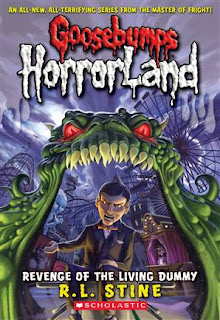
The first image I chose to analyze is a book cover from R.L. Stine’s Goosebumps HorrorLand Series: “Revenge of the Dummy". The creepy font that is used for the words “Goosebumps” and “HorrorLand” instantly conveys a lot of information to the viewer about the book they are seeing. The oozing, dripping title is reminiscent of blood, telling the viewer that the book falls into the horror genre. This imagery of blood is further developed by the red colour chosen for the word “Goosebumps”. To further this imagery, the texture of the font brings the words into the foreground of the picture, making it look as if the blood is on top of the page.

I feel that this font would really appeal to kids between the ages of 7 – 12 (the recommended age group for these books, and therefore, the target audience). Kids in this age group are very visual, and therefore, the oozing, creepy font on the cover of this book would attract them, and simultaneously tell them that the book is scary. This font is consistent throughout the entire Goosebumps series, conveying that each book within the series is also scary. Although I cannot give the proper name for this font, I can say that I have always referred to it as “The Goosebumps Font,” and have associated it with horror, creepiness, and danger ever since my childhood. The font used on the book covers for R.L. Stine’s “Goosebumps” series is very successful in attracting it’s target audience, and conveying information about the genre they belong to. I’ve always been told not to judge a book by its cover, but clearly you should.

http://www.fanpop.com/spots/twilight-series/images/720496/title/movie-posters

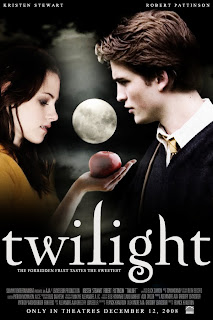
The fancy serif almost calligraphic typeface used for this Twilight movie poster conveys a graceful, fancy, fantasy type of feel that works well with the story around which the movie was based. Twilight is a film depicting a romance between an ordinary girl named Bella, and the perfect Edward Cullen, who also happens to be a vampire. I feel that this movie was mainly targeted towards girls between the ages of 11 and 18, who were the main age group that the books, upon which this film was based, were target towards. I believe that the font used for the title “twilight” on this poster conveys the grace and beauty of both the character Edward Cullen, and the love story that takes place between the two characters. I would say that the white, loopy title also conveys a sort of dreamy, fantasy like feel that reflects the dreaminess of the storyline, and draws in the target audience. I also noticed that the title was written in all lowercase letters. I feel that this was done to further develop the graceful feel of the text, as lowercase letters are less bulky, and tend to flow nicer than uppercase letters.


The font that is used in the background of the album cover of this Austin Powers soundtrack conveys both information about Austin’s character, and the Austin Powers film itself. The typeface used for the words in the background of this cover was very common in the 60s, and is often associated with the hippie movement of that time. This font was chosen because the entire film is based around the humor of bringing a man from the 60’s into the modern day. The 60s vibe that this font gives off is also important in conveying the type of music that can be found on the actual CD, subtly informing the consumer of what they’re about to buy. The chubby font, varying in size and colour, is very lighthearted, fun, and “groovy,” much like Austin’s character, and the Austin Powers film itself. Although the majority of songs on this CD are from the 60s, I feel that the bright, colourful, and fun cover would attract the younger audience that the films also attract, introducing a new generation to the 60s decade and lifestyle.

Overall, it is quite clear to me now just how influential typography can be in a design. A typeface can communicate many things to a viewer, such as genre, mood, and cultural influence, while simultaneously attracting specific demographics. After observing typography used in a variety of successful ways, I now feel that the typography I choose for my poster design will play just as large of a role as the images I put into my design.

Sunday, September 27, 2009

Exploration of Colour

This week I decided to look further into how colours and colour schemes are used in the real world of design. I went over to HMV to check out some existing album covers, analyzing how colour is used within them, while seeking inspiration for my own album design. Once there I walked through the isles making note of every album cover that caught my eye. With this list in hand, I went home to look up the covers I wrote down. Taking a closer look into how colour schemes were used to create aesthetically pleasing, eye-catching designs, I discovered just how often the colour schemes we discussed in class were actually applied in the professional world of design.

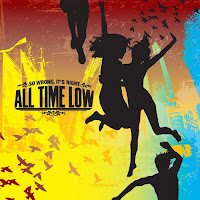
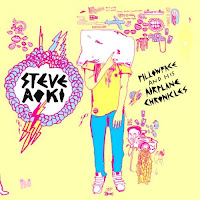
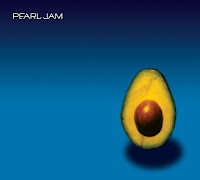
Triad colour schemes consist of three colours that are an equal distance from each other on the colour wheel. The most common triad I noticed while looking through the CDs that caught my eye were the primary colours (red, green, and blue). When together, I find the primary colours to be very bold and eye-catching, which is why I believe album covers such as: “So Wrong, It’s Right” by All Time Low, “Back to Bedlam” by James Blunt, “Pillowface and His Airplane Chronicles” by Steve Aoki, and “Pearl Jam” by Pearl Jam, were able to catch my eye; however the use of various tints and shades, along with differing amounts of each colour relative to each other produced differing tones and effects in each piece.The album “The People or the Gun” by Anti-Flag used two of the three primary colours (red and yellow) to create a very bold, in your face, eye catching design.

“So Wrong, It’s Right” by All Time Low


“Back to Bedlam” by James Blunt


“Pillowface and His Airplane Chronicles” by Steve Aoki


"Pearl Jam” by Pearl Jam


“The People or the Gun” by Anti-Flag


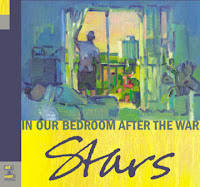
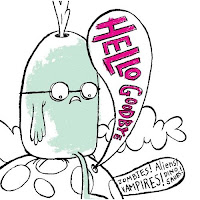
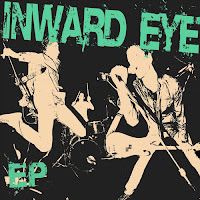
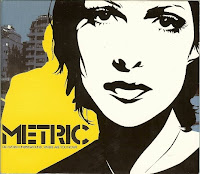
Similar to triad colours, complementary colours often seem to be utilized in album covers. Being opposite from each other on the colour wheel, complementary colours create contrast between each other, allowing the piece to stand out to the viewer. Albums such as “In Our Bedroom After The War” by Stars, “Zombies! Vampires! Aliens! Dinosaurs!” by HelloGoodbye, and “EP” by Inward Eye, are just a few examples of albums that use complementary colours on their covers. The Metric album “Old World Underground, Where Are You Now?” creates colour contrast on several levels by using the complimentary colours blue and yellow in the background of the album, while placing a black and white image above this. While the yellow and blue are contrasting each other, the colourless black and white image creates contrasts between it and the colourful background.

“In Our Bedroom After The War” by Stars

“Zombies! Vampires! Aliens! Dinosaurs!” by HelloGoodbye


“EP” by Inward Eye


“Old World Underground, Where Are You Now?” by Metric


The albums “The Listening” by Lights, and “The Young Eyes EP” by Sara Lov use a type of colour scheme known as split-complementary. Similar to complementary colour schemes, split complementary drops one of the two complementary colours, and uses the colours adjacent to it instead. For example, the font on the Lights album is a yellow-orange colour, while the background is dark blue and various shades of purple. The Sara Lov album uses this colour technique as well, using hues of blue and green to contrast with the pink background.

“The Listening” by Lights

“The Young Eyes EP” by Sara Lov


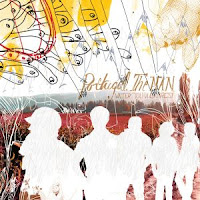
Analogues colour combinations use three colours that are adjacent to each other on the colour wheel, and often tend to create very warm or cool tones. Colours such as red, yellow, and orange bring a very warm element into a work, while colours like blue, purple and green are cooler. “Love Drunk” by Boys Like Girls, “Appeal to Reason” by Rise Against, and “Waiter: You Vultures!” by Portugal The Man, are examples of albums that use warm analogues colours on their covers. While “Love Drunk” is exclusive to these colours, “Appeal to Reason” and “Waiter: You Vultures!” create contrast through the use of black, or small amounts of complementary colours.

“Love Drunk” by Boys Like Girls

“Appeal to Reason” by Rise Against


“Waiter: You Vultures!” by Portugal The Man


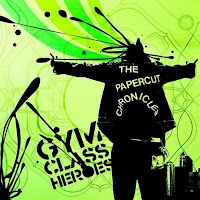
Monochromatic was probably the most common type of colour scheme among the CDs that caught my eye. Monochromatic colours only use various tints and shades of one colour, and are often contrasted by black and/or white. I feel that the contrast created between monochromatic colours tends to be subtler than the contrast created in complementary or triadic colour schemes, however I don’t feel that this makes the design any less eye catching. I personally find monochromatic colour schemes very aesthetically appealing. Albums: “Old Crows/Young Cardinals” by Alexisonfire, “This Is What The Edge Of Your Seat Was Made For” by Bring Me The Horizon, “The Papercut Chronicles” by Gym Class Heros, “Diva” by Sarah Brightman, and “Life Starts Now” by Three Days Grace, all use monochromatic colour schemes on their album covers in what I feel to be very visually pleasing ways.

“Old Crows/Young Cardinals” by Alexisonfire


“This Is What The Edge Of Your Seat Was Made For” by Bring Me The Horizon


“The Papercut Chronicles” by Gym Class Heros


“Diva” by Sarah Brightman


Sometimes colours were not present at all, and black and white images and fonts were used instead, creating vivid contrast between the two shades. “The Sound of Maddness” by Shinedown, and “Fino Bleed” by Die Mannequin, are two examples of albums with black and white covers.

“The Sound of Maddness” by Shinedow


“Fino Bleed” by Die Mannequin


Overall, I’ve discovered that there are many different ways that colours can be combined to create differing moods and effects in a design. The colour combinations that are used don’t exclusively determine the feel of a design, but rather a combination of the hues, value, intensity, and amount of one colour relative to the others all play a factor. Every design I analyzed was unique from each other, despite the fact that they were commonly grouped with albums that used the same types of colour schemes.

I sometimes found it difficult to classify which type of colour scheme an album cover belonged to, as every colour wheel I referred to seemed to differ from the last. Sometimes red’s complementary colour was green, while other times it was blue. This made it difficult for me to establish whether a complementary or split complementary colour scheme was being used, or hard to determine if a design was triadic. It was also sometimes tricky to tell if certain covers were using analogues or monochromatic colour schemes, as it was difficult to tell if various tints and shades, or a completely new hue was being used. I don’t think these details are extremely important however, as long as I have a general understanding of what colours look good together, and what effects different colour combinations have on a design when I’m designing my piece. I feel that finding the right colours for a design will come from a combination of this knowledge and some trial and error.


Tuesday, September 15, 2009

Crap Principles

This weeks Digital Media class taught us how to utilize contrast, repetition, alignment, and proximity successfully to produce aesthetically pleasing designs. Ever since leaving class on Tuesday, I’ve been observing the use of the CRAP principles within works of digital media that I come across. It didn’t take me very long to realize just how often these principles are actually used within the world of design

http://www.simplyfinedesign.com

The first good example of the CRAP principles I came across was this ad for “Simply Fine Design,” a web design company who clearly know what they’re doing. Contrast is created within this design through the use of colour and size. Because white is used as a backdrop to this piece, it is easy to create contrast between the images in the background and foreground. The black font that is used contrasts perfectly against the white background, while the orange and green within the font and the green within the apple contrast each other nicely. Various font sizes are used throughout the advertisement as well. The name of the company is much larger then the description of what the company does. This is because the company wants their name to stand out to the viewer, and also because the description is much longer than the title, and would clutter the poster if its font was too big. This variation in size catches the viewer’s eye, makes them focus on the company’s name, and keeps the piece from looking bland and boring.

The colours within this piece create repetition as well as contrast. The green colour of the apple can also be found within the ‘S’, ‘F’ and ‘i’ of the company’s title, as well as in the word “Design” at the top of the page. This repetition brings balance into the image, and encourages the viewer’s eye to move around the page.

The last two of the CRAP principles, proximity and alignment, are used to strategically space out the different elements of the poster, making the poster visually pleasing and not too cluttered. This is important not only because it keeps the overall image looking clean and tidy, but also because the company is called Simply Fine Design, emphasizing the importance of keeping a design simple, clean, and well organized.

http://www.ttthings.com

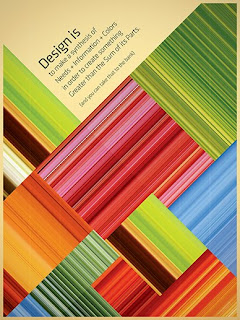
The next image I decided to analyze was a poster made for a design competition, which I feel has expertly utilized the CRAP principles. Contrast has been created within this image in a variety of interesting ways. The colours within each box have been carefully chosen so that they contrast with the colours that surround them. Alternating horizontal and vertical lines are also used, further contrasting each box from one another while creating a repetition in pattern. While both the bright colours, and alternating lines within the boxes allow each box to stand out against the other, the greatest contrast that is created in this piece is between the bright, colourful, and busy boxes, and the solid beige area at the top of the page. The dull, solid, light beige colour allows this area to stand out from the rest of the vivid poster, while creating contrast between it and the dark font that is placed upon it.

The font at the top of the page is tilted rather then horizontal to match the slant that the boxes are on. The placement of the font in this way makes the design more dynamic and interesting to look at, while the repetition of these angles throughout the poster encourage the viewer to move their eye around the page, and keep the poster looking neat and tidy. I believe that the beige section is placed at the top of the page because the busy, vivid boxes appear to be heavier then the beige area, making it natural to place the lighter, less dense section above them.

http://www.35mmdesign.com

The third image I chose to analyze was a poster made for what I presume to be a concert. Although this poster is monochromatic, contrast is created between the light and dark yellows being used. The two images within the poster contrast as well. While the top image of the skull is an outline, the image at the bottom of the page is a solid silhouette. Once again differing font sizes keep the design interesting and draw attention to the name being emphasized, while light yellow lines in the background of the poster, consistent font, and the mirrored title add repetition to the piece. The images and font within the poster are well spaced and organized, keeping the poster from looking too cluttered and busy, and making the overall image appear balanced and visually pleasing.


http://www.anna-om-line.com

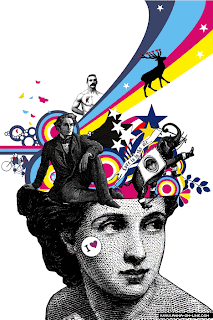
The final image I chose to observe came from Anna-Om-Line, a website that showcases the digital media of artist Anna Lopez. The image I chose uses contrast, repetition, alignment, and placement successfully to create an aesthetically pleasing design. I feel that the most prominent contrast within the image is between the solid and vivid colours that are used, and the grayscale graded images. Contrast also exists between the realistic, organic images of the three people and the elephant, and the cartoonish, geometric images of the stars, hearts, and butterflies.

Colour and shape are used in a way that creates repetition within the piece. The same colours are use throughout the image and are always placed in the same order relative to one another. Repetition in shape can be found throughout the poster in the form of stars and circles.

The page has been organized in a way that has placed the majority of the grayscale images towards the bottom half of the page, while the colourful images remain above. There is a large amount of overlap of the gray and colourful images at the center of the page, however the most noticeable contrast is created by the black deer silhouette further up the page, and the red heart surrounded my the colorless face.

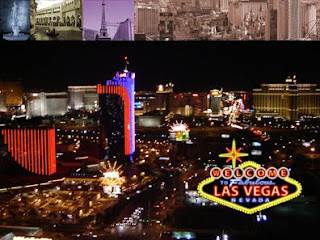
The postcard we created in the digital media lab this week can also be said to demonstrate the CRAP principles of design. Contrast is created between the dark night sky and the bright neon lights of the buildings, the “Welcome to Los Vegas” Sign, and the bright images placed at the top of the page. Repetition is created using the neon sign in the bottom right corner, keeping the neon look consistent throughout the postcard, while the alignment of the logo at the bottom right of the card successfully makes overall image more visually appealing. Finally, the placement of the neon “Welcome to Las Vegas” sign, and the bright images at the top of the postcard bring balance to the design, and encourage the eye to move around the page.

After analyzing the use of the CRAP principles within various works of digital media, I have found that these simple rules of design truly are applied to many successful works. I feel that the CRAP principles provide excellent guidelines for inexperienced designers such as myself, helping me to organize my work in aesthetically pleasing ways. Even though these guidelines provide excellent tips for creating successful images, I feel that a designer must also consider the messages and feelings they want their images to convey, and use their artistic license to achieve these. The artist should not solely rely on the CRAP principles, but rather should use them as general guidelines they can follow when designing a work of digital media.


Tuesday, September 8, 2009

Digital Media: Class One

Prior to attending my first BDC 192 lecture, I always imagined digital media to include any designs that were digitally created, however I never quite realized just how versatile digital media could be. I was particularly impressed by the unique example of digital media shown to us in class on Tuesday in which designs were created on the side of a high-rise building using some kind of light projector. This was a new and innovative form of digital media that I had never seen before and it really opened my eyes to the versatility of forms that digital media could take on.

During the class discussion about digital media I continued to be surprised by the vast amount of forms in which digital media could be found. Not only was digital media present in advertisements, animation, and websites, but it could also be found on t-shirts, billboards, album covers, and in video games just to name a few. I soon realized how immersed our culture is in digital media, and just how much it surrounds us in our everyday lives.

I feel that digital media is particularly important for a student of Radio and Television because it is such a crucial component to so many aspects of the industry. Advertisement is a key example of where digital media plays a crucial role. From billboards, poster designs and logos, to online ads and animation for a TV commercials digital media allows advertisements to take on countless forms and to be visually pleasing, which catches the viewers eye.

When McLuhan said: “The medium is the message,” he was making a statement about how it is not the content of a medium that is important, but rather the change that results from the way this content is put forth. This is an interesting perspective that I have never given thought to before. I’ll admit that I had never even heard of Marshall McLuhan before Tuesday’s class, and that when I first heard his statement: “The medium is the message,” I misinterpreted it to mean that the content of a message is determined by the way in which the message is put forth. After thinking about the statement from this perspective I decided that the medium was not solely the message because the content of a message could be communicated in many different ways, through many different mediums, and although the medium through which a message is communicated does influence the overall effect of the message, it does not determine the content of the message.

After looking more into what McLuhan meant by “The medium is the message,” I realized that he was looking at a much bigger picture then the one I initially saw. The content of a message is irrelevant to McLuhan’s statement because he was more concerned with the social impacts that resulted from the kind of media that was being used. To apply this to everyday life, it is not the messages that we are texting back and fourth to each other about how our days went or how cute a boy is that are important, but rather the fact that we as a society are communicating instantly with one another with such ease, and the way this technology has and will continue to impact our day to day lives. In this sense I feel that McLuhan was right in saying that “the medium is the message,” because overall, the way we communicate with one another has a much greater impact on society then the content within a medium.